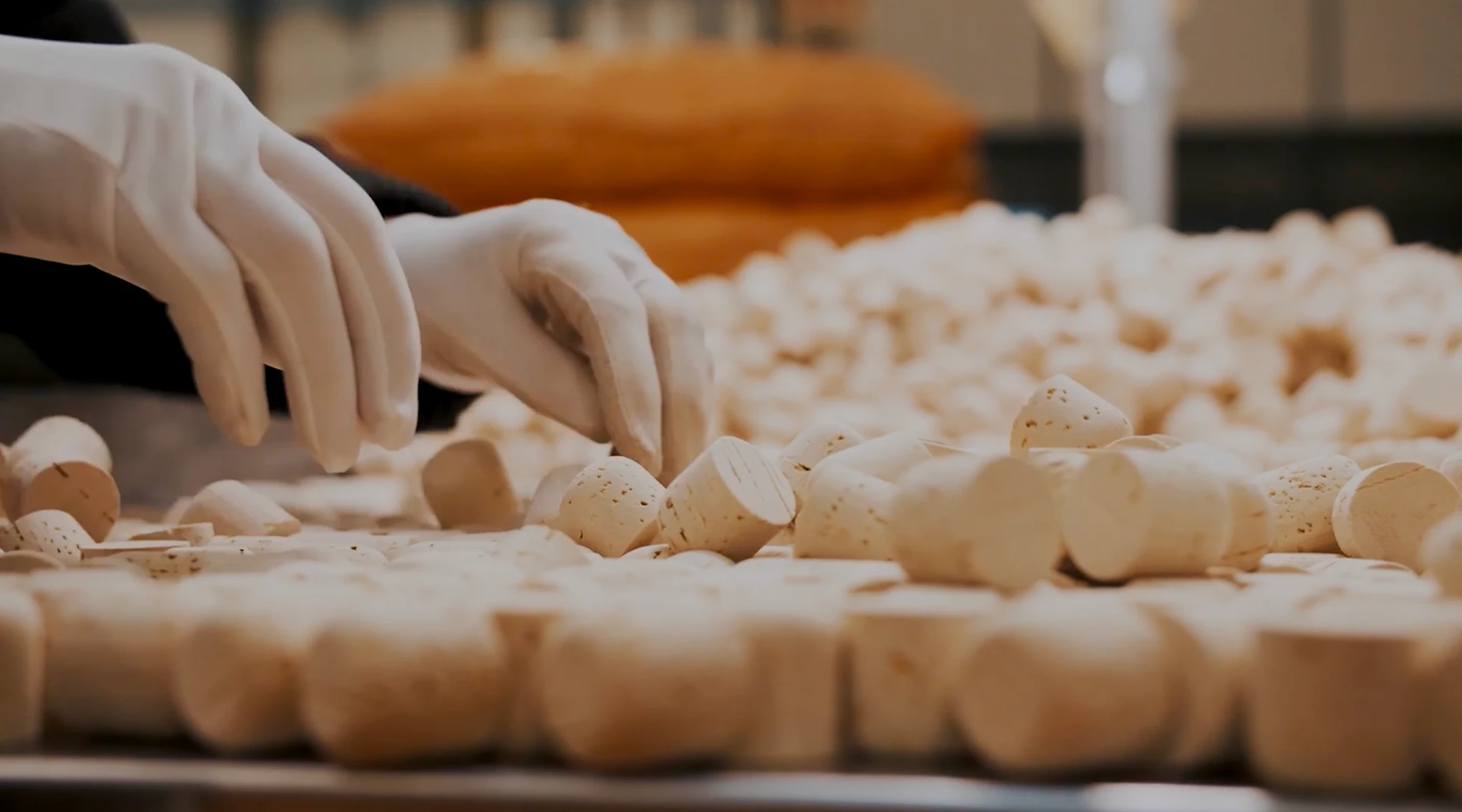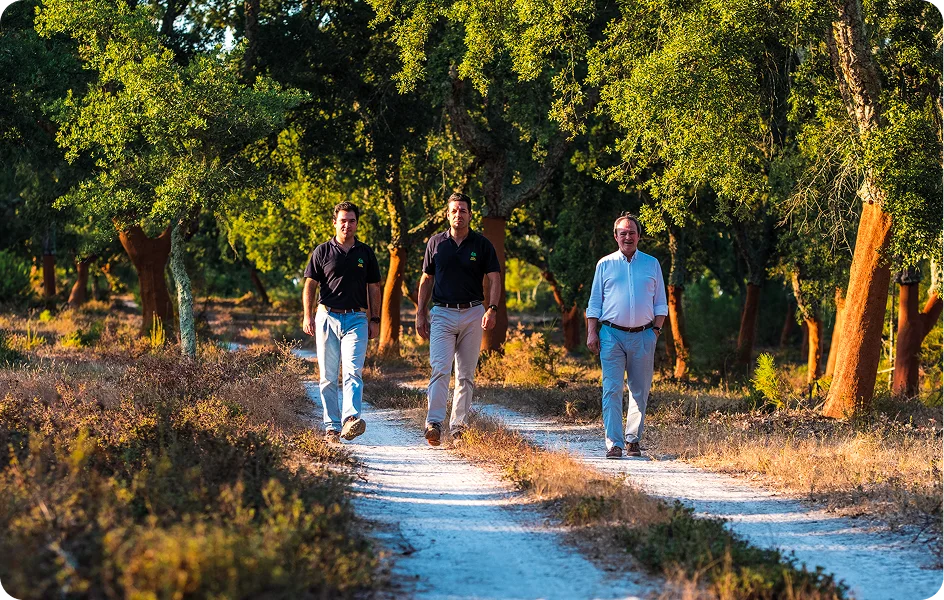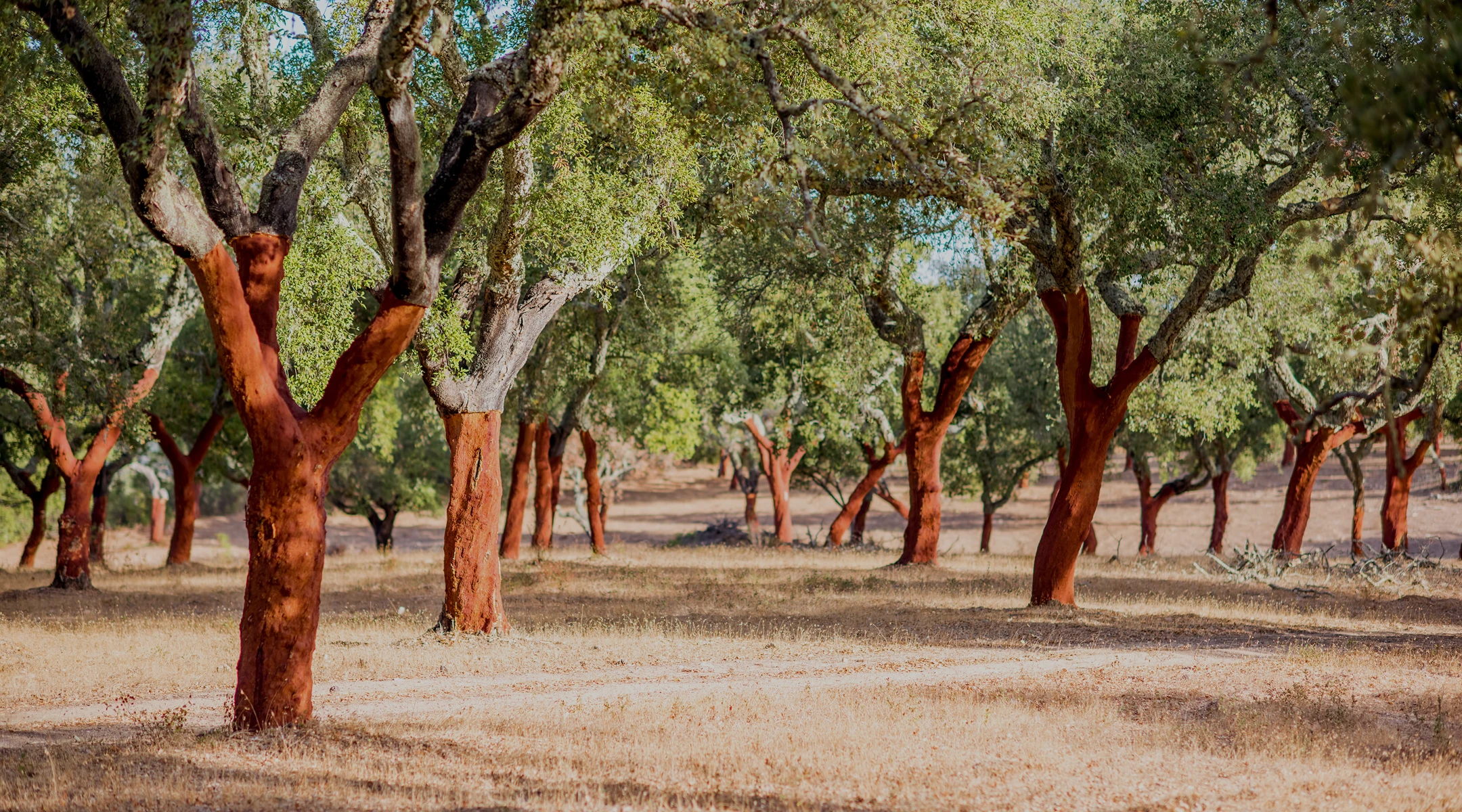
Our specialized team of forestry professionals in Portugal work with producers from the main cork oak forest regions in both Portugal and Spain, implementing advanced forest management programs and selecting the best quality raw material for their corks.
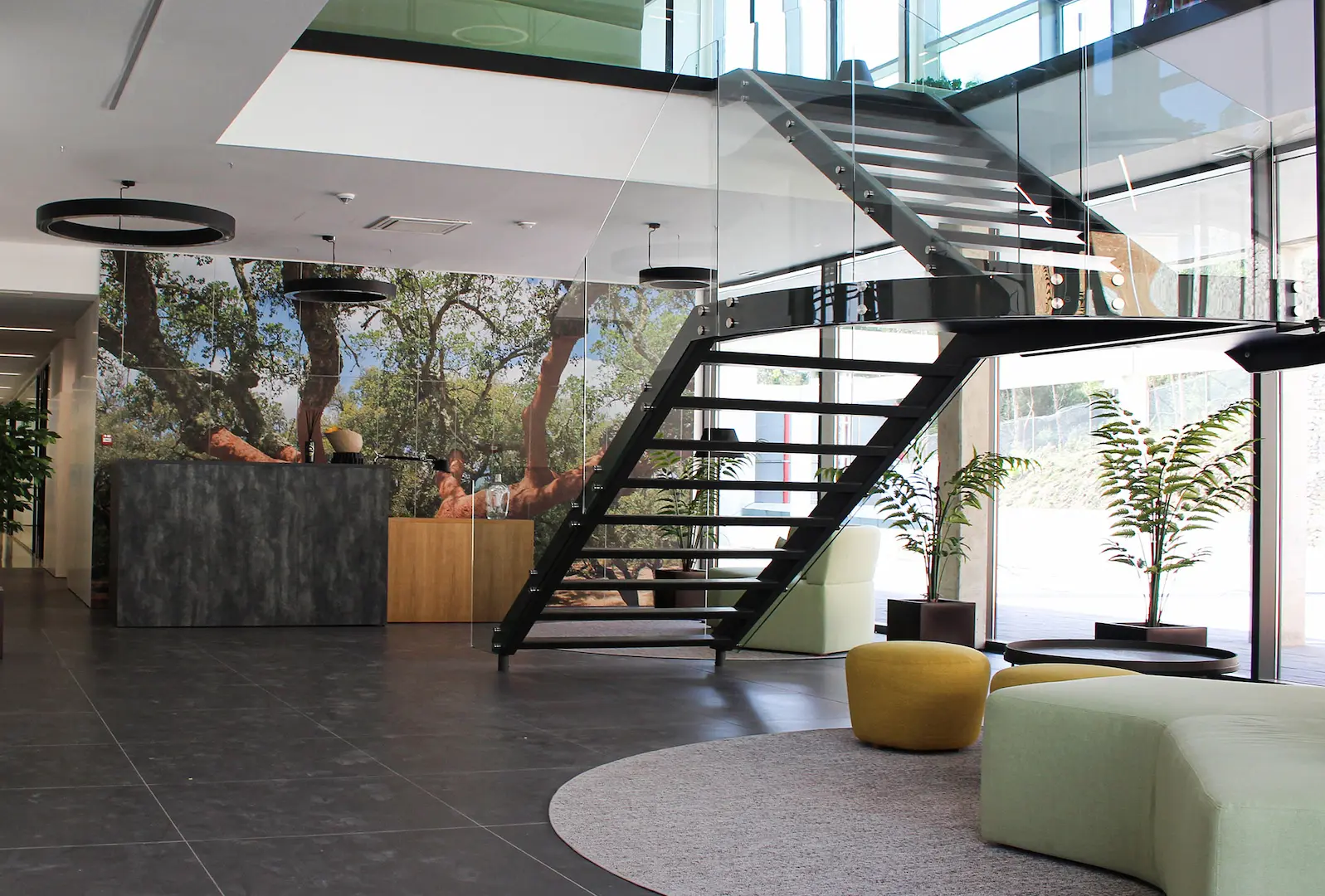
We are strongly committed to the use of resources more efficiently, thus minimizing the environmental impacts of our activity reducing our emissions. We have a daily focus on:
- Minimizing the environmental impacts of our activities - the mitigation and adaptation to climate changes, the protection of biodiversity and ecosystems and pollution prevention.
- Fostering a sustainable management of the value chain, which implies the sustainable use of resources.
- Assessing the possibility of implementing environmental improvements, whenever there are changes in processes, people, and products.
.webp)
Natural Carbon Sinks
Natural Carbon Sinks
As a leading supplier of natural cork, we want our customers and consumers to have complete assurance that natural corks supplied by Talis are sustainably and ethically sourced. We consider our proactive role in this area especially necessary because, as the WWF verifies, montado cork forests:
- Support one of the world's highest levels of forest biodiversity, including the highest diversity of plants found anywhere the world.
- Offer irreplaceable sanctuary to millions of wintering birds, and vital habitat for a native wildlife population that includes several highly endangered bird and animal species.
- Provide an essential, sustainable income source that supports local industry, traditional cultures, and family livelihoods.
- Function as massive carbon sinks, naturally sequestering and providing critical long-term storage for the dangerous atmospheric carbon greenhouse gasses (GHG) that impact climate change.
- Play a key role in critical ecological processes, including water retention, fire prevention and soil conservation.
- Defend European landscapes against creeping desertification and consequent depopulation, poverty and loss of vital ecological biodiversity.
- Are one of the best examples of balanced conservation and development anywhere in the world.
.webp)
Sustainable Forestry
Sustainable Forestry
Talis is aware of the importance of preservation of cork oak forests. Not directly owning cork forests, Talis maintains close and strategic relationship with cork forest owners in Portugal and Spain, building lasting partnerships based on trust, shared knowledge, and quality.
We consider it an essential part of our mission to ensure we meet our generation's needs today in a manner that does not compromise our future generations' ability to meet their needs tomorrow.
Talis is aware of the importance of environmental preservation and commitment to minimize the company footprint. The team continually assesses and improves their environmental practices, so they address both inbound and outbound impacts.
.webp)
Decarbonizing our Activity
Decarbonizing our Activity
In order to reduce our greenhouse gase emissions, we employ two key measures with direct impact.
Firstly, we prioritize the reduction of energy consumption by conducting energy audits to identify critical areas of intervention with a particular focus on energy efficiency.
Secondly, we actively invest in a transition to renewable energy sources by producing renewable electricity in our facilities.
.webp)
Zero Waste & New Energy Sources
Zero Waste & New Energy Sources
Talis has set zero waste as one of our sustainability goals and is proactive in seeking to eliminate and reuse the by-products resulting from our operations. In addition to making energy-efficiency and waste-reducing improvements and investments throughout our operations, we seek to reuse and recycle wherever possible.
Targeting our two main production inputs — corkwood and water —Talis has developed closed-loop systems to optimize material and energy waste in both cases.
Today, virtually 100% of harvested corkwood can be reutilized. Therefore, at every stage from the forest onward,Talis has developed closed-loop systems to capture all excess and sub-grade corkwood by-products.
Talis has installed a centralized vacuum system throughout our production facilities to capture this cork dust before it reaches the air. This also creates a cleaner, healthier work environment. We have begun to substitute the use of natural gas and electricity by biomass. The result of this is 535,6 ton of CO2eq p/year that are not released into the atmosphere
.webp)
High-efficiency use of heat energy & water
High-efficiency use of heat energy & water
Talis has installed a high-efficiency corkwood boiler system that optimizes both heat energy and water usage.
After each batch of corkwood is boiled, heated wastewater gravitates to a holding tank, where a heat exchanger transfers the heat energy from the wastewater to a new batch of clean water.
Water use is simultaneously maximized via continuous high-pressure filtration and recycling of boiling water through a steam condensation collection and purging system that prevents cross-contamination between batches.
.webp)
Alternative & renewable energy sources
Alternative & renewable energy sources
Wth the goal of minimizing our contribution to Climate Change, Talis has defined numerous action plans and targets with respect to energy reduction:
- 18% energy reduction by 2024 in the technical cork production unit.
- 5% energy reduction by 2026 in the natural cork production plant.
- Renewable energy alternatives in place at the technical cork production unit by 2023.
- The use of cork dust as a source of energy by 2023.
.webp)
3P Strategy