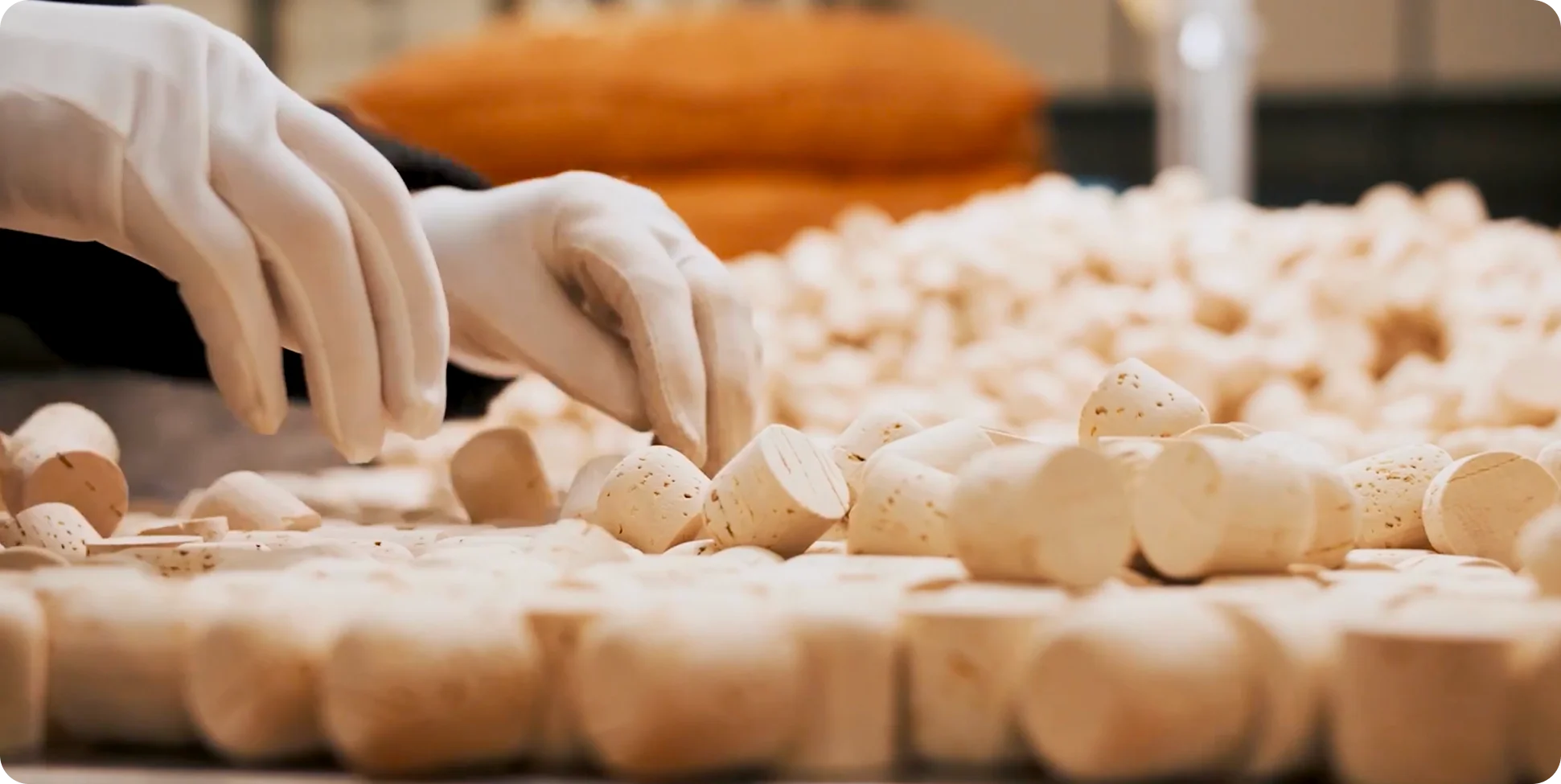
Each year, we produce over 600 million natural and technical cork stoppers alongside 75 million bartops, delivering consistent quality across every product line.
This commitment to adding value and maintaining rigorous quality standards drives our approach to innovation, ensuring that every cork we create meets the highest expectations of our partners and customers worldwide. We are committed to:
- Producing products that comply with global regulations and are safe for food contact.
- Promoting Circular Economy by using 100% the of the raw material.
- Leveraging the rich and naturally environmentally friendly products our forests provide us with.
- Developing environmentally friendly technologies, processes, products, and packaging materials.
- Producing products that are an added value to customers, meeting real market needs, with the highest quality possible.
- Investing heavily in R&D and QC to give our customers real guarantees.

Product Portfolio
Product Portfolio
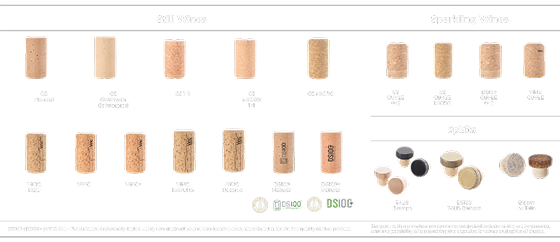
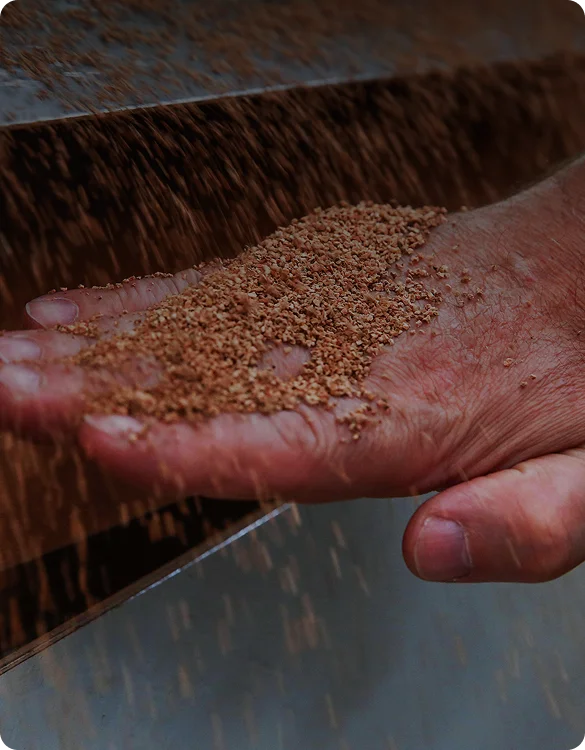
Our complete portfolio of cork closures results from the efficient use of all cork materials.
The recovery rate of all cork materials confirms the value added to by-products, integrating diverse production cycles (natural corks, discs, technical corks), and demonstrates how we are dedicated to the efficient use of the raw materials.

Carbon Neutrality
Carbon Neutrality
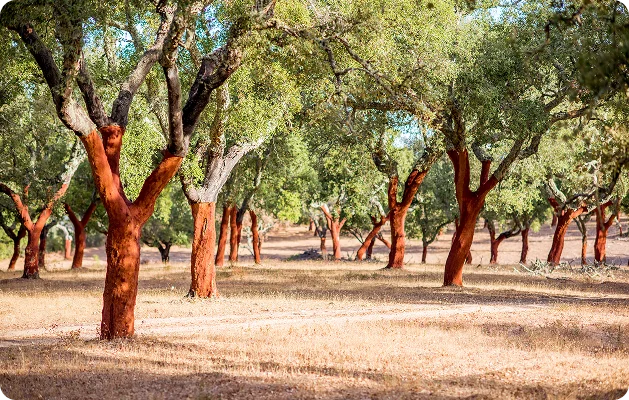
The result of our carbon footprint study clearly shows the cork CONTRIBUTION TO CARBON NEUTRALITY.
The study shows a very low impact in Carbon Emissions, and when we consider the cork oak forest as Carbon sink System, we can Cleary show that the extraction ok corkwood actively contributes to carbon sequestration and neutrality.
Montado Carbon Sink of 7,7 to 14 ton (CO2)/ ha / year.
Cork closures
Cork closures
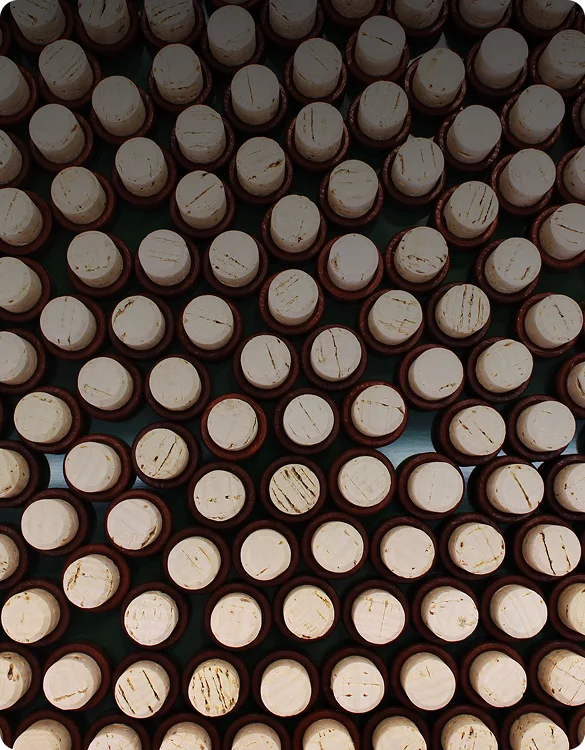
The Naturally Sustainable Option
- Zero Waste!
- Use 100% of the raw material we purchase;
- Produce products that comply with global regulations and are safe for food contact;
- Produce products with the least impact;
- Leverage the rich and naturally environmentally friendly products our forests provide us with.
- Promote Circular Economy.
Plant-based binder in our technical corks
Plant-based binder in our technical corks
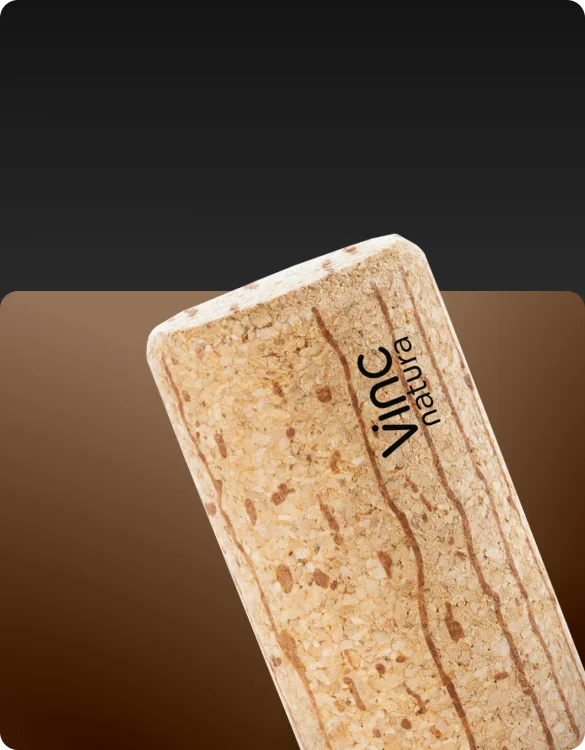
Talis will begin training people, from local communities, in specific jobs/roles that are becoming harder to find experienced people to work in.We developed Vinc Natura, a new technical cork that eliminates the need for synthetic materials, by utilizing a 100% plant-based polyol as an alternative to the traditional polyurethane-based glue – launched in 2023.

New Bartop capsule material
New Bartop capsule material
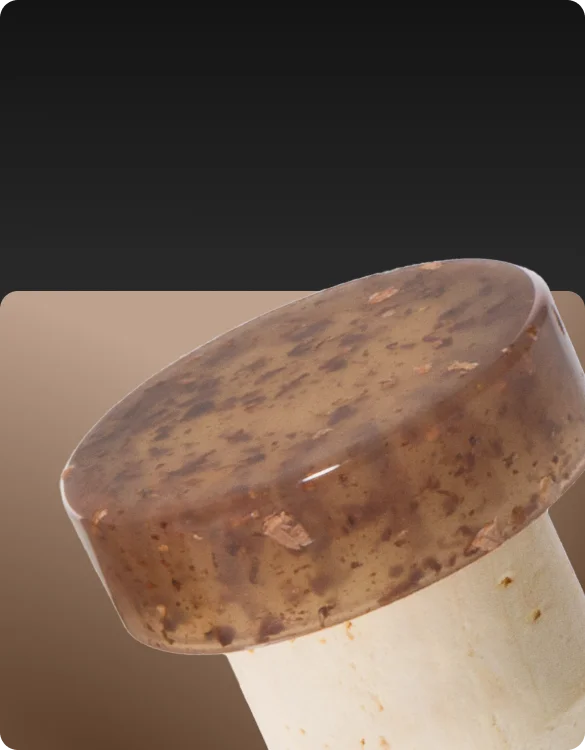
New Bartop capsule material with bio source plastic mixed with cork
In 2022, Talis introduced Bloom by Talis, an innovative bartop capsule solution for spirits and fortified wines. This capsule material is produced by combining a biobased polymer with cork granules, that are a by-product from our own production facilities transformed into a key component of this new product.

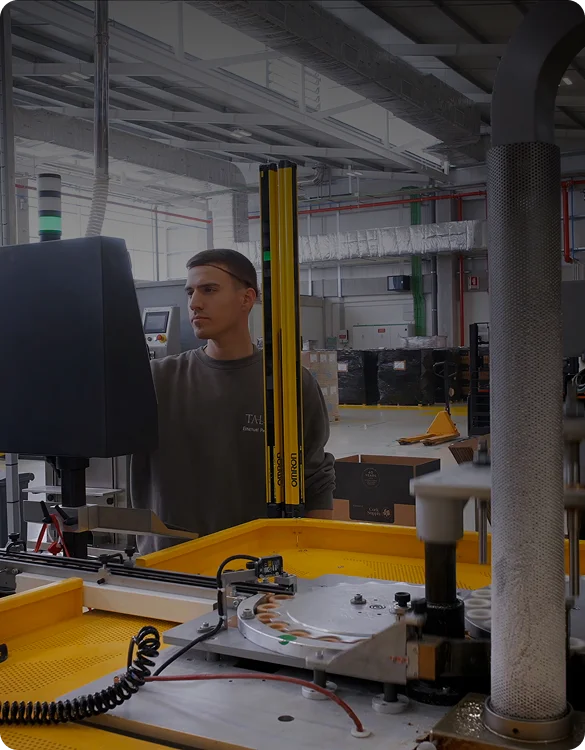
The highest excellence standards recognized
The highest excellence standards recognized
Our well-being strategy: from its inception in 2020 to a major boost in 2022
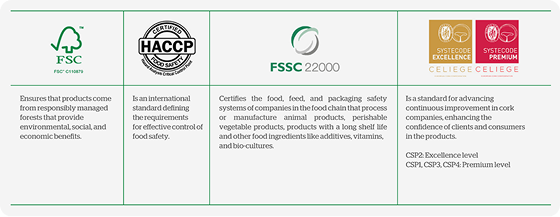
At Talis, we have integrated all relevant management systems to meet the highest quality and control standards, enhancing the excellence of our portfolio in the market.
We highlight the most important certifications in this context:
Cork Stoppers: A Bioproduct That Goes Beyond Recycling
Cork Stoppers: A Bioproduct That Goes Beyond Recycling
At Talis, we value sustainability at every stage of the production and life cycle of our cork stoppers. While recycling is widely seen as an important environmental solution, we believe that could not be the best option for cork stoppers.
Cork stoppers are a 100% natural, biodegradable, and 100% renewable product with a life cycle that minimizes environmental impact. The cork oak tree, from which cork is harvested, is a sustainable tree that is not damaged during harvest, contributing to the preservation of forests and biodiversity. Additionally, these forests play a crucial role in carbon capture, absorbing approximately 10 tons of CO2 per hectare per year.
While the recycling of other materials, such as plastic and glass, is essential to reducing environmental impact, cork stoppers stand out as an exemplary bioproduct. Their ability to naturally biodegrade means they do not require the intensive processing that other materials demand. At the end of their life cycle, cork stoppers should be placed in the organic waste, where they can degrade naturally and return to the environment without causing harm.
Additionally, cork stoppers can be reused in various circular economy processes, such as creating design materials, insulation, and furniture. However, recycling cork stoppers—adding operations to their end-of-life—can increase environmental impact due to the energy and resources required for transportation and processing.
Therefore, while we are not against recycling, we believe that reuse or disposal in organic waste are the most sustainable options. This way, the natural cork cycle is preserved, keeping its environmental impact minimal while maximizing the ecological benefits this bioproduct offers.
By choosing a cork stopper, you are selecting a product that promotes sustainability at every stage of its life cycle, contributing to the preservation of ecosystems and supporting local communities.
Choose a sustainable solution that respects the natural cycle of cork – a choice that goes beyond recycling.
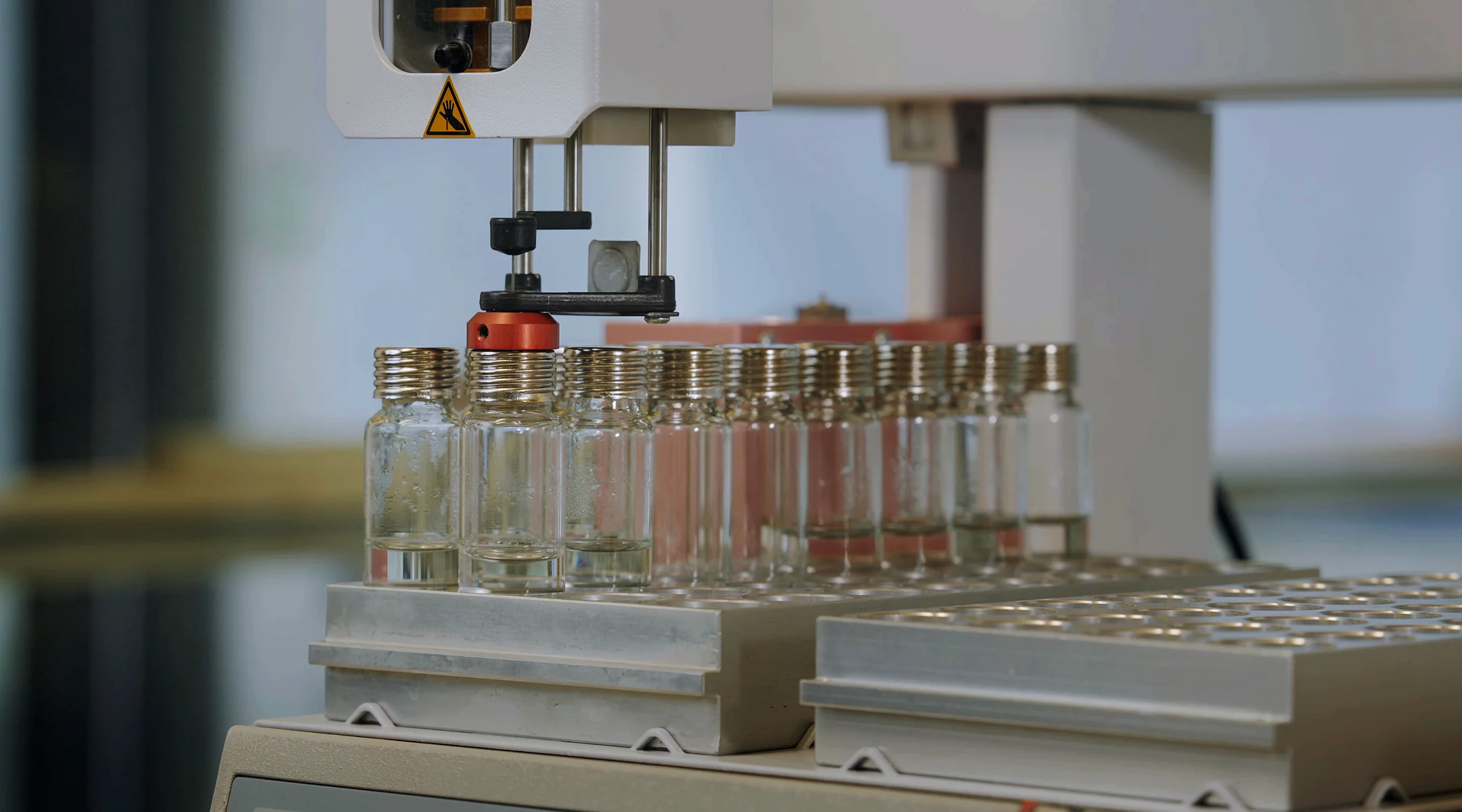
3P Strategy